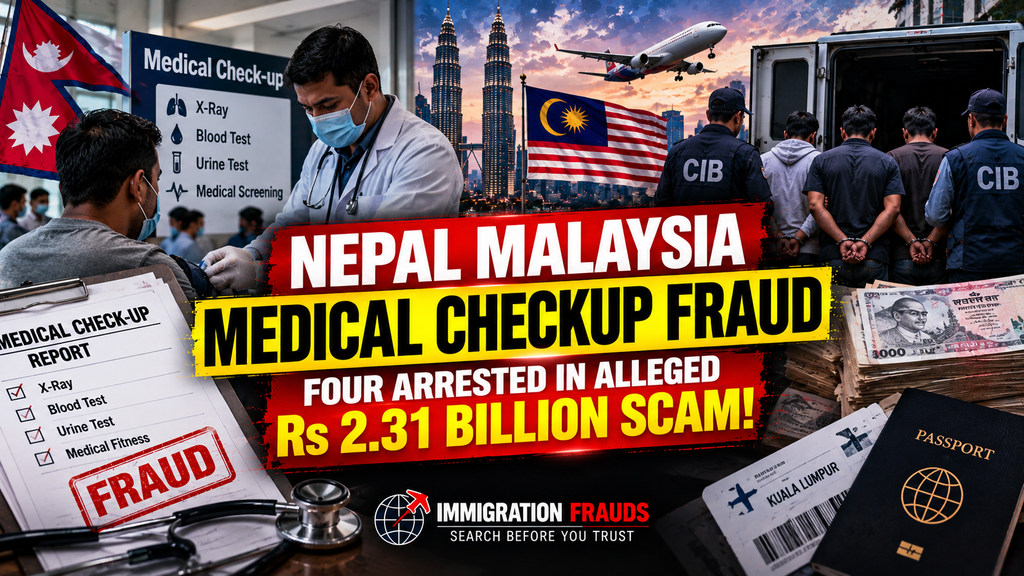
Nepal’s Central Investigation Bureau (CIB) is investigating an alleged medical screening fee scam involving Nepali workers travelling to Malaysia, with preliminary findings indicating that more than Rs 2.31 billion may have been collected from hundreds of thousands of workers through unauthorised charges.
Four individuals have been arrested in connection with the Nepal Malaysia medical checkup fraud case. Investigators allege that workers were charged additional biometric service fees through Macrotech Pvt. Ltd. despite already paying for the government-prescribed medical examination required for overseas employment.
The investigation estimates that Macrotech collected fees from approximately 733,000 workers between the end of 2075 BS and 2080 BS. The preliminary estimate suggests that Rs 2.31628 billion was collected unlawfully. These figures remain subject to investigation.
The case has raised serious questions about recruitment-related expenses, medical screening procedures and the financial burden placed on Nepali migrant workers seeking employment abroad.
Nepal Malaysia Medical Checkup Fraud: Who Has Been Arrested?
The Central Investigation Bureau has arrested four people in connection with the alleged fee collection scheme.
The individuals named in the case are:
- Kailash Khadka, 42, from Kageshwari Manohara Municipality-1.
- Ravi K.C., 40, from Chhangu Narayan Municipality-9, Bhaktapur.
- Praveen Tiwari, 42, originally from Gorkha and residing in Tokha Municipality-11.
- Ram Pukar Tiwari, 45, originally from Sarlahi and residing in Gokarneshwor Municipality-6.
The arrests were made on October 16. The accused are being investigated on fraud-related charges and under Nepal’s Prevention of Organized Crime Act, 2070 BS, with court-authorised detention for investigation.
Police allege that the individuals used Macrotech Pvt. Ltd. to collect additional fees from workers undergoing health screening for employment in Malaysia.
The allegations have not been established as proven guilt by a court.
How the Alleged Medical Screening Fee Scheme Worked
The Nepal Malaysia medical checkup fraud investigation centres on allegations that workers were required to pay an additional biometric service fee on top of the regular medical examination charges.
According to the investigation, workers were already undergoing the standard health examination by paying the government-determined fee of Rs 4,500 at the time covered by the inquiry.
However, investigators allege that workers were also required to undergo additional screening and pay a separate fee described as a biometric service charge.
Macrotech reportedly charged 100 Malaysian ringgit per worker, equivalent to approximately Rs 3,160 at the exchange rate cited in the investigation.
Police allege that workers were effectively burdened with two sets of charges during the overseas employment process.
The investigation is examining whether these additional collections were unlawful and whether the arrangements complied with the applicable agreements and regulations.
Rs 2.31 Billion Allegedly Collected From 733,000 Workers
One of the most significant findings in the Nepal Malaysia medical checkup fraud case concerns the scale of the alleged collections.
Preliminary findings indicate that Macrotech collected biometric service fees from approximately 733,000 Malaysia-bound workers between the end of 2075 BS and 2080 BS.
The reported figures are:
| Detail | Reported figure |
|---|---|
| Workers allegedly charged | 733,000 |
| Additional fee per worker | 100 Malaysian ringgit |
| Approximate Nepalese rupee equivalent per worker | Rs 3,160 |
| Estimated total alleged collection | Rs 2.31628 billion |
| Period under investigation | End of 2075 BS to 2080 BS |
These are preliminary figures attributed to the investigation, not a final judicial finding.
Where Did the Collected Money Allegedly Go?
Investigators are also examining the movement of the money collected from workers.
According to the investigation, approximately 90% of the additional fees collected in Nepal was allegedly sent to a Malaysian company called Bestinet, while Macrotech reportedly retained the remaining 10%.
An official involved in the investigation stated that the money was transferred to Malaysia after being collected from workers.
The Nepal Malaysia medical checkup fraud probe is therefore examining not only the collection of the fees but also how the funds were distributed between the companies involved.
The precise legal status of the transactions and whether the transfers violated applicable laws remain matters for the investigation and subsequent legal proceedings.
Was the Additional Medical Fee Authorised?
A key issue in this case is whether the additional biometric service charge was unlawful or part of the bilateral recruitment arrangement between Nepal and Malaysia.
The Central Investigation Bureau alleges that workers were charged unauthorised fees beyond the government-prescribed medical examination cost.
However, the issue is disputed. The Malaysian Embassy in Kathmandu has stated that Macrotech Pvt. Ltd. and Bestinet Sdn. Bhd. were authorised to manage the biomedical system, collect service fees and transfer funds under the arrangement between the two governments. It also stated that Malaysian employers were responsible for health examination costs under the applicable agreement.
This distinction is important: the companies’ reported authorisation to operate the system does not, by itself, resolve whether the specific fees collected, the amounts charged to workers or the manner of collection complied with the agreement.
The Nepal Malaysia medical checkup fraud investigation must establish the applicable rules, the actual transactions and whether any charges were collected unlawfully.
Workers Allegedly Faced Double Financial Burden
For Nepali workers seeking employment overseas, recruitment-related expenses can represent a substantial financial burden.
The alleged scheme described in the investigation involved workers paying for regular medical examinations while also being charged an additional biometric service fee.
Investigators allege that workers were compelled to undergo extra screening under the name of medical processing and pay additional amounts to proceed with overseas employment.
The process reportedly stopped after 2080 BS.
If the allegations are established, the case could have wider implications for transparency in migrant worker recruitment, the disclosure of service charges and the protection of workers from unauthorised costs.
Nepal Malaysia Medical Checkup Fraud and the Wider Recruitment Dispute
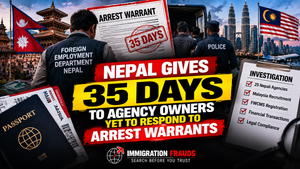
The investigation is unfolding amid a separate dispute over Malaysia’s decision to select 25 Nepali manpower companies as principal recruitment agencies.
Malaysia has restricted recruitment under its Foreign Worker Centralised Management System (FWCMS) to selected agencies, while Nepal has expressed dissatisfaction with the selection process.
Nepal’s Department of Foreign Employment has also issued arrest warrants against operators of the 25 selected manpower companies. The case includes Rabin Gurung, operator of Trust Nepal, who was arrested and handed over to the department for investigation.
These recruitment-related proceedings are separate from the allegations concerning additional medical screening fees, although both issues form part of wider tensions surrounding Nepal–Malaysia worker recruitment.
The Nepal Malaysia medical checkup fraud case highlights the importance of transparent recruitment systems, clear fee structures and effective oversight of the agencies and companies involved in overseas employment.
What Nepali Workers Should Know Before Paying Recruitment Fees
Workers planning to travel to Malaysia for employment should carefully verify the charges involved in the recruitment and medical screening process.
Practical precautions include:
- Request an itemised breakdown of medical examination, biometric and recruitment charges.
- Ask for official receipts for every payment.
- Verify fee requirements through the relevant government department or authorised medical centre.
- Keep copies of employment contracts, payment records and medical documents.
- Report suspected unauthorised charges to Nepal’s Department of Foreign Employment or the police.
- Avoid assuming that a fee is compulsory simply because a recruiter or intermediary demands it.
Workers who believe they have been affected by the alleged scheme should preserve their records and contact the appropriate authorities for guidance.
Key Takeaway On Nepal Malaysia Medical Checkup Fraud
The Nepal Malaysia medical checkup fraud case involves allegations that Macrotech Pvt. Ltd. collected additional biometric service fees from hundreds of thousands of Nepali workers travelling to Malaysia. Nepal’s Central Investigation Bureau has arrested four individuals and is investigating reported collections estimated at Rs 2.31628 billion.
The accused allegedly imposed additional charges beyond regular medical examination fees, while questions remain about the authorisation and implementation of the biometric service charge under the Nepal–Malaysia arrangement. The investigation is ongoing, and the allegations have not been proven in court.
FAQs : Nepal Malaysia Medical Checkup Fraud
1. What is the Nepal Malaysia medical checkup fraud case?
The Nepal Malaysia medical checkup fraud case concerns allegations that workers travelling to Malaysia were charged additional biometric service fees through Macrotech Pvt. Ltd. beyond the regular medical examination charges.
2. How much money was allegedly collected in Nepal Malaysia Medical Checkup Fraud?
Investigators estimated that approximately Rs 2.31628 billion was collected from around 733,000 workers. These figures are preliminary and remain subject to investigation.
3. How many people have been arrested in Nepal Malaysia Medical Checkup Fraud?
Four individuals—Kailash Khadka, Ravi K.C., Praveen Tiwari and Ram Pukar Tiwari—were named as arrested in connection with the investigation.
4. What was the alleged additional charge in Nepal Malaysia Medical Checkup Fraud?
The investigation states that workers were charged 100 Malaysian ringgit per person, equivalent to approximately Rs 3,160 at the exchange rate cited in the case.
5. Which companies are mentioned in the investigation?
Macrotech Pvt. Ltd. is identified as the company through which the fees were allegedly collected. Bestinet, a Malaysian company, is named in connection with the alleged transfer of most of the collected funds.
6. Were the additional fees officially authorised?
The issue is disputed. Police allege that the collections were unlawful, while the Malaysian Embassy has stated that Macrotech and Bestinet were authorised to manage the biometric system and collect service fees under the bilateral arrangement. The legality of the specific charges and collection practices remains a central issue.
7. Have the accused been convicted?
The investigation is ongoing, and the report does not establish a conviction. The allegations must be determined through the legal process.
Source : Ratopati
Read About : Nepal Recruitment Agency Investigation: 35-Day Deadline for Agency Owners Facing Arrest Warrants